
 Profile on Facebook. Page opens in new window.
 Profile on Twitter. Page opens in new window.
 Profile on Linkedin. Page opens in new window.
 Profile on Youtube. Page opens in new window.
 Profile on Instagram. Page opens in new window.
 Profile on TikTok. Page opens in new window.
 Donate KPH

Policymaking for Equality – from conversations to solutions
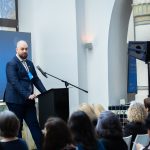
At the Policymaking for Equality conference, organised by Campaign Against Homophobia in cooperation with the Nordic Council of Ministers, more than 70 participants gathered in Warsaw, all of whom shape public policy in different ways. They included representatives of the government and parliament, embassies and members of the diplomatic corps of the Nordic countries, as well as people working in public administration, public services and civil society organisations.
The event created space for an exchange of experience with partners from the Nordic countries, who have been developing coherent and systemic approaches to equality policies for many years. It also enabled a comparison of different models of action, helping us better understand which solutions may be effectively implemented in the Polish context.
The discussions focused on three key areas. First, how to design law in an inclusive way, so that it reflects diverse social experiences and does not lead to exclusion. Second, how to build engagement and resilience among organisations working for human rights. Third, how to develop intersectoral cooperation in a way that is real and grounded in accountability, rather than merely declaratory.
The Policymaking for Equality conference confirmed that effective equality policies require cooperation, both between public institutions and between the public sector and civil society. It is precisely through such cooperation that tools are created to translate values into concrete action.
We would like to thank our partners for their trust and for helping to create this space for dialogue: the Chancellery of the Prime Minister of the Republic of Poland, the Department for Equal Treatment of the Chancellery of the Prime Minister, the Nordic Council of Ministers, the Embassy of the Kingdom of Denmark in Warsaw, the Embassy of Finland in Warsaw, the Embassy of Iceland in Warsaw, the Embassy of Sweden in Warsaw, and the Embassy of the Kingdom of Norway in Warsaw.
We also extend our thanks to the Messalka Events team for their hospitality and organisational support throughout the event.
This meeting was not a conclusion, but a starting point for further work on solutions that strengthen equality in practice.
Fot. Dawid Dobrogowski, Daria Boczkowska










Groundbreaking CJEU ruling: Failure to transcribe a foreign same-sex marriage certificate is incompatible with EU law
In the judgment published today, the Court of Justice of the European Union responded to a preliminary question submitted by the Supreme Administrative Court in Warsaw. The Court has no doubt that Poland must transcribe foreign marriage certificates of same-sex couples. Despite the lack of marriage equality, Poland is obliged to introduce solutions enabling the transcription of a foreign marriage certificate into Polish civil registry records.
Polish law under the scrutiny of the Court of Justice of the EU
The judgment published today constitutes the CJEU’s response to a preliminary question submitted by the Supreme Administrative Court. While examining a case concerning the refusal to transcribe a marriage certificate of a same-sex couple, the Supreme Administrative Court questioned whether EU law (the principle of freedom of movement and the right to respect for private and family life, including Articles 20 and 21 of the Treaty on the Functioning of the EU, Article 7 of the Charter of Fundamental Rights of the EU, as well as Directive 2004/38/EC of the European Parliament and of the Council of 29 April 2004 on the right of citizens of the Union and their family members to move and reside freely within the territory of the Member States) precludes a Member State from refusing to transcribe a marriage certificate concluded by its citizen in another Member State with a person of the same sex.
[The full text of the question is available HERE.]
The case examined by the Supreme Administrative Court concerned a marriage entered into by two men in Germany. One spouse holds both Polish and German citizenship, while the other holds only Polish citizenship. After getting married, they applied for the transcription of their marriage certificate to the Head of the Civil Registry Office in Warsaw. Their request was refused, and this refusal was upheld by the Mazovian Voivode. The couple appealed the decision to the Regional Administrative Court in Warsaw, which dismissed their complaint. After appealing this judgment, the case reached the Supreme Administrative Court, which decided to submit a preliminary question to the CJEU.
The Advocate General sides with the couple
Before the Court issued its judgment, an opinion was presented by Advocate General Jean Richard de la Tour. In his opinion, he explicitly stated that Poland, as a Member State, has a positive obligation to ensure the transcription of a foreign marriage certificate.
[More on the Advocate General’s opinion HERE.]
The Court has ruled — now it’s time for the Polish government
As a consequence of today’s judgment, the case will return to the Supreme Administrative Court and will likely result in the annulment of the decision refusing the transcription of the marriage certificate. In answering the preliminary question, the CJEU interpreted EU law as opposing national regulations that—because the Member State does not allow same-sex marriages—do not permit the recognition of a marriage legally concluded by two citizens of that Member State of the same sex while exercising their freedom of movement and residence in another Member State. This means that Poland must introduce mechanisms enabling the recognition of a marriage concluded abroad.
As stated in the reasoning of today’s judgment: “the refusal by the authorities of a Member State of which two Union citizens of the same sex are nationals to recognise the marriage concluded by them lawfully, in accordance with the procedures laid down for that purpose in another Member State in which those Union citizens have exercised their freedom of movement and residence, may constitute an obstacle to the exercise of the right enshrined in Article 21 TFEU, since such a refusal is liable to cause those citizens serious inconvenience in administrative, professional and private matters […]. In particular, such a refusal prevents those Union citizens […] from continuing that family life while benefiting from that legal status, which is certain and effective vis-à-vis third parties, and forces them to live as single persons upon their return to their Member State of origin.” The Court further noted that, due to the lack of recognition of the marriage in Poland, “there is a concrete risk that those citizens will encounter serious difficulties in organising their family life upon returning to that Member State, since in many everyday activities, both in the public and private spheres, they are unable to rely on their marital status, even though that status was lawfully established in the host Member State.” Finally, the Court held that the obligation for Poland to recognise a same-sex marriage does not “undermine national identity nor threaten the public policy of the Member State of origin.”
[Read the full judgment HERE.]
However, today’s ruling of the Court of Justice of the EU is of key importance not only for the couple involved in the case, but also for the entire LGBT+ community in Poland. It clearly states that refusing to transcribe a marriage concluded abroad is incompatible with EU law. Therefore, regardless of the absence of registered partnerships and marriage equality, Poland must ensure the possibility of effective transcription. This is an important step for all those who married in another EU Member State, whose marriages will finally be recognised in Poland!
What specific steps will the Polish government take following this ruling? We will keep you updated, but we already call on the Minister of the Interior to issue guidelines for Heads of Civil Registry Offices regarding the practical implementation of this judgment.
The preliminary question in this case was submitted to the CJEU by the Supreme Administrative Court thanks to the work and perseverance of, among others, attorney Anna Mazurczak, recipient of the 2024 Equality Crown.
FACE FORWARD: Summary of the ILGA-Europe 2025 Conference
Although a week has passed since the ILGA-Europe Conference in Vilnius, the emotions, conversations, and inspirations that took place there are still with us. It’s one of the most important gatherings of the European LGBT+ movement, which this year, under the theme “Face Forward,” brought together over 420 participants from 55 countries, representing hundreds of organizations and initiatives working for equality.
The conference featured more than 70 sessions, workshops, and meetings, including the Regional Marriage Strategy Meeting, dedicated to advancing marriage equality strategies.
The Campaign Against Homophobia (Kampania Przeciw Homofobii) was represented by:
- Miko Czerwiński
- Miłosz Przepiórkowski
We returned from Vilnius with an even stronger sense of community, energy, and conviction that solidarity across borders is the real strength of our movement.
Financed by the National Freedom Institute – Center for Civil Society Development under the Government Program for the Development of Civic Organizations 2018–2030, Priority 5 – Emergency Support.
2025 Equality Crowns Gala: Video Coverage
On September 25, Warsaw once again became a stage where the most powerful voices in the fight for equality could be heard. During the festive gala marking the seventh edition of the contest organized by the Campaign Against Homophobia, the Equality Crowns were awarded, distinctions given each year to individuals, initiatives, and institutions that bravely advocate for the LGBT+ community. This event, considered one of the most prestigious in Poland, is also a celebration of courage, solidarity, and visibility. Watch the video recap:
Video: Ania Rejman
AWARDEES
Activism – Kuba Gawron, co-author of the Atlas of Hate, for his determination in fighting against “LGBT-free zones” and for his victory over Ordo Iuris.
Institutions – Department for Equal Treatment, for preparing draft bills on civil partnerships and defending the Istanbul Convention.
Law – Paweł Marcisz and Marcin Górski, lawyers behind the case “Szypuła and Others v. Poland” before the European Court of Human Rights, confirming the need to recognize same-sex unions.
Politics – Joanna Senyszyn, Member of the European Parliament, for her consistent support of the LGBT+ community and pro-feminist action.
Media – Leonard Osiadło (OKO.press), for reliable journalism and amplifying the visibility of the queer perspective.
Internet – Mariusz Kozak, Sebastian Szarata, and Mariola Kozak, known from the show “Gogglebox. In Front of the TV,” for breaking stereotypes and portraying the authentic lives of LGBT+ families.
Culture – Intergenerational Dancing by Paulina Braun, for fostering queer visibility and intergenerational connection.
Business – Where is Willy, a brand created by Ksawery, for innovative products supporting trans people and promoting gender euphoria.
The partners of the 2025 Equality Crowns are: Embassy of Australia, Embassy of Belgium – Representation of Flanders in Poland and the Baltic States, Embassy of Ireland, Embassy of the Kingdom of the Netherlands, Embassy of Norway, Bank BPH, ING Bank Śląski, ISS, Linklaters, Orange, and Sephora. The gala was held under the honorary patronage of the Minister of Culture and National Heritage and the Embassy of Canada. Media partners: Gazeta Wyborcza, OKO.press, OUTfilm, TOK FM, and wyborcza.pl. Matronage: Stonewall Group and Lambda Warsaw.
No longer about civil partnerships, but about the law on the status of a next of kin in a relationship and a cohabitation agreement
This is not a moment of triumph. After two years of Donald Tusk’s government, the ruling coalition has finally developed a joint proposal. It introduces a bill on the status of a next of kin in a relationship and a cohabitation agreement. This is not the law we’ve been fighting for over the years. It’s a meager response to great expectations – and the only one that, in the current situation, can offer any sense of security.
The bill on the status of a next of kin in a relationship and a cohabitation agreement, presented by PSL and the Left, does not bring the equality that LGBT+ people in Poland have long dreamed of and desperately need. It’s merely a shadow of the solutions that have existed in other European countries for decades. And yet, it’s still a small step forward on the path toward marriage equality.
For over 20 years, tens of thousands of couples in Poland have lived without any legal protection. Every day, they live with the fear that if something happens – illness, accident, death – their relationship will mean nothing in the eyes of the state. It’s a life built on love, but without any guarantee that the state will respect that love.
The bill on the status of a next of kin in a relationship and a cohabitation agreement does not introduce marriage equality. It doesn’t even establish civil partnerships. It overlooks the needs and concerns of over 50,000 rainbow families. It’s not a compromise, as some suggest. It’s a solution designed primarily to make it easier for politicians who have been postponing this decision for over 20 years to finally act.
It proposes modest, cautious measures that offer a little bit of safety to those who previously had none. It’s a step forward – but so small and careful that it’s hard to see in it the courage that all families in Poland truly deserve.
67% of Polish society – across political divides – supports legal recognition of same-sex unions. That’s a majority clearly saying: it’s time to acknowledge reality, time to protect all families.
This is not what we hoped for. We wanted a law that isn’t afraid of equality. But since a proposal has appeared – one that at least begins to repair a long-standing injustice – no politician should hesitate to vote for it. And the president should sign it without delay. Our role is to make sure they don’t run away from this obvious decision.
This is a law about the minimum of safety and dignity. A law about human stories that have waited for years to finally be treated seriously.